Exhaust Smoke Colours Explained is a detailed guide created to help vehicle owners understand what different exhaust smoke colours mean and why they should never be ignored. Visible exhaust smoke often indicates underlying engine, oil, or fuel system issues.
Modern vehicles are designed to produce minimal emissions. When coloured smoke becomes noticeable, it usually signals a problem that requires attention.
Exhaust Smoke Colours Explained helps drivers identify warning signs early, reduce repair costs, and avoid major engine damage.
Table of Contents
This section of the Exhaust Smoke Colours Explained guide explains how exhaust smoke colour directly reflects engine condition. Each colour points to a different type of mechanical or combustion-related issue.
Recognising these signs early can prevent expensive repairs and unexpected breakdowns.
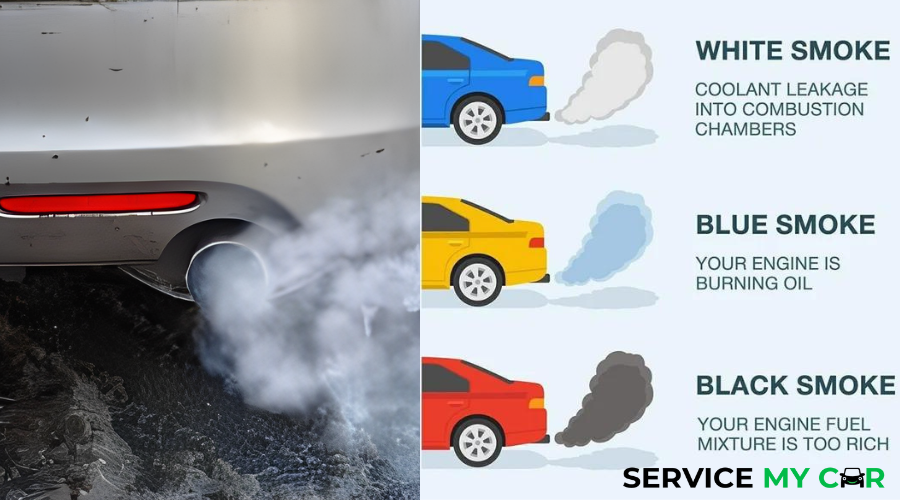
Exhaust smoke colours act as early warning signals. This is why Exhaust Smoke Colours Explained is an essential reference for everyday drivers.
Ignoring ongoing exhaust smoke can lead to engine overheating, oil contamination, and long-term mechanical failure.
White exhaust smoke is commonly seen during cold starts and is often caused by condensation inside the exhaust system.
If white exhaust smoke continues after the engine warms up, it may indicate coolant leaking into the combustion chamber due to a damaged head gasket or engine component.
Blue exhaust smoke means engine oil is being burned during combustion. This is one of the most serious problems covered in this Exhaust Smoke Colours Explained article.
Common causes include worn piston rings, faulty valve seals, and turbocharger oil leaks.

For a deeper breakdown, read our guide on blue exhaust smoke causes and diagnosis.
Black exhaust smoke usually indicates that the engine is burning too much fuel. This can be caused by faulty injectors, clogged air filters, or incorrect sensor readings.
Black smoke reduces fuel efficiency and increases harmful emissions.

| Smoke Colour | Main Cause | Risk Level | Recommended Action |
|---|---|---|---|
| White | Condensation or coolant leak | Low to High | Monitor or inspect |
| Blue | Oil burning | High | Immediate inspection |
| Black | Excess fuel | Medium | Engine diagnostics |
This Exhaust Smoke Colours Explained guide shows that while some exhaust smoke issues are harmless, others require professional inspection.
If your vehicle continues to produce visible exhaust smoke, visit our common car issues fixed by expert mechanics or explore our comprehensive car repair services in Eltham.
For official vehicle safety and emissions information, refer to VicRoads roadworthiness guidelines .
Exhaust Smoke Colours Explained is essential reading for drivers who want to protect their engine, reduce repair costs, and maintain vehicle reliability.
Experience the difference that quality auto services can make!



All rights reserved for Magic Tune Ruidcar Australia Pty Ltd | Design With ❤️ By We Love Design
ⓒ Copyright 2024
